Jacki Donovan
Staff Writer
Two hundred feet or so from the Pond Student Union building, a man in heavy boots vanishes into a hatch on the sidewalk to work on one of Idaho State University’s oldest and best-kept secrets.
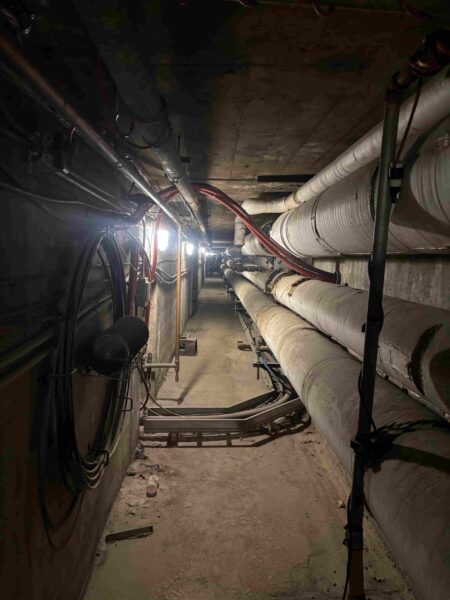
Under every class, lab and sports game, two and a half miles of steam tunnels snake throughout our campus, and they’re turning 80 this year.
Starting at the ISU heat plant, the tunnels continue as far south as the Liberal Arts building before stretching east as far as the Life Science complex. Around the clock, 600-degree Fahrenheit steam is pumped through the length of this system, accounting for about 85% of campus heating.
As such, ISU heat plant manager Steve Kingery doesn’t see his work being done any time soon. He and his team of five plant operators spend this part of the semester gearing up for summer, at which point the tunnels shut down to allow for three precious months of routine maintenance.
“My guys and I are on call 24/7,” confirmed Kingery. “Whether that’s during the semester keeping the plant running or during the summer when we’re working repairs.”
This brief maintenance off-season often constitutes the difference between a safe and unsafe workplace for facilities staff. The department’s current goal of pulling all live power from the tunnel is a work-in-progress spanning years, due to the necessity of keeping services running nine months out of the year.
If the operating schedule and working conditions weren’t enough, the tunnels are starting to show their age, with more and more upkeep required each summer. This year, entire sections of tunnel will need to be completely replaced, starting with the Business Administration building.
For Head of Facilities Staff Chris Wagner, though, this is just another summer on the job.
“The preventative maintenance we’re able to get done doesn’t change scheduling a bit,” Wagner assured The Bengal. “And in the past decade alone we’ve made improvements to the tunnels that should keep them running a long time.”
Despite the outside labor involved in keeping ISU’s heat on, both Kingery and Wagner agree that the alternative is far worse. More recently built campuses such as BYU-Idaho heat their campus with buried steam lines, prone to leakage and even rupture.
“Dealing with leaks in buried lines is a nightmare,” Kingery admitted. “We save a lot of money at ISU with a mid-sized plant and by not having to dig up our lines every couple of months.”
Many state schools have saved themselves from this trouble. Utah State, the University of Utah, and Boise State all make use of utility tunnels similar to ISU, a long-term solution much to the relief of organizers like Wagner.
“My job would be much harder if we had to heat campus with newer, buried lines,” Wagner speculated. “Buried just doesn’t last, and the state has deferred plenty of maintenance funds so we can continue to contract out all the work on our tunnels that we need to.”
But it’s a long way to summer still, and work goes on regardless of off-season plans. Facilities office supervisor Mandy Myers said it best when asked about Kingery and his team: “Man, they are here around the clock. And they do a good job, too.”