Jacki Donovan
Staff Writer
If you’re reading this newspaper, it’s more than likely that you’re on the ISU campus. If that’s true, it’s more than likely that you’re within eyeshot of a drink machine.
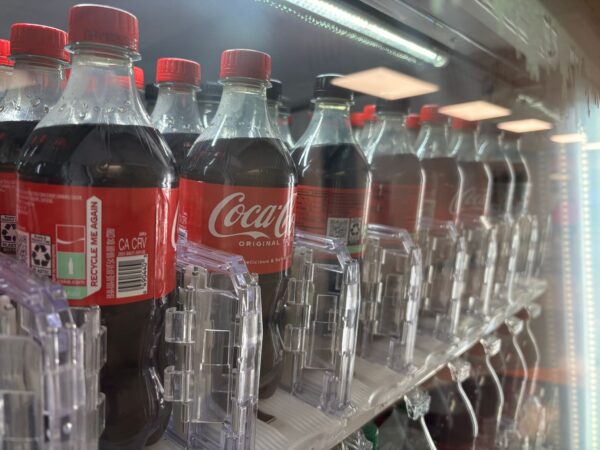
Take a look at it. Notice anything? That’s right, dear reader: you’re on a Coke Campus.
“That’s a made-up phrase,” claims ISU Retail director Tish Azevedo. “The university has had a vending contract with Coke for a long time– Coke just handles our ordering, stocking and buybacks.”
These single-distributor vending contracts are commonplace on college campuses. One drink distributor (Swire Coca-Cola, in ISU’s case) handles the entire operation, from countless vending machines to restaurant outlets on campus.
If this sounds to you like a monopoly, you can breathe easy, because it’s not–technically. Standard business practice between Coca-Cola and Pepsi requires an 80-20 product division between the two vendors in an effort to engender product variety without pulling too much revenue from the campus’ primary vendor.
“In my experience, that 80-20 split is how it’s always been done,” recalls Chartwell’s general manager Tim McLaughlin. “Before I worked for ISU, I was with campus dining at Montana Tech, which is a Pepsi campus.”
For ISU staff, it’s just another day on the job, standard industry practice all the way down. As for the student body, the jury is still out when it comes to our quaint quasi-monopoly.
Some students think of vending contracts such as ISU’s as part of the nature of business.
“Oh, I totally figured Coke had some kind of contract with us,” exclaimed sophomore business major Greg Welter. “And, honestly, companies that want access to a new market sometimes have to undercut.”
It’s just as well for many that student preferences often align, as in Welter’s case: “If I’m going to the C-Store, I’m grabbing a Monster.”
For other students, though, it’s more than a matter of preference. Recent actions on the part of Coca-Cola make ISU’s partnership with the company an ethically questionable reality.
“I would definitely say I have a problem with Coke in general,” says freshman finance major Joseph Gaspar. “Ever since my family heard they might’ve called ICE on their own employees, we’ve been boycotting, one hundred percent.”
But students like Gaspar, who these days “pretty much doesn’t drink soda at all,” may well be out of luck. ISU merchandising does not see the contract changing anytime soon, and the operation is fairly closed-doors even to the managers involved.
“We really don’t know how Coke and ISU split the money,” verifies Azevedo. “We get handed down the contract from Coke and we just have to listen.”
Coca-Cola has given Chartwell’s an even simpler gig. “I just look at their invoices,” chuckles McLaughlin. “If it’s working for us, why change it?”
According to Gaspar, however, change is in the air– enough so that he aims to press on with the boycott.
“I think it’s worth it,” attests Gaspar. “I went to the LED rally a few weeks ago, and, man, people really care what’s going on.”
The Bengal has reached out to representatives from Swire Coca-Cola Distributors. They declined to comment.