Rebecca Brainard
Guest Writer
Kathie Chandler was working as a massage therapist when one afternoon, she said, a voice interrupted one of her sessions. The massage room was quiet except for the soft hum of a fan.
“Tell her where the money is. Tell her it’s in the coffee cans in the garage,” Chandler recalled hearing.
She hesitated before repeating the message to the woman on the table. The client froze. The voice, she said, sounded like her husband, who had died.
The next day the woman called back with an update. She had discovered $30,000 hidden in coffee cans in her garage.
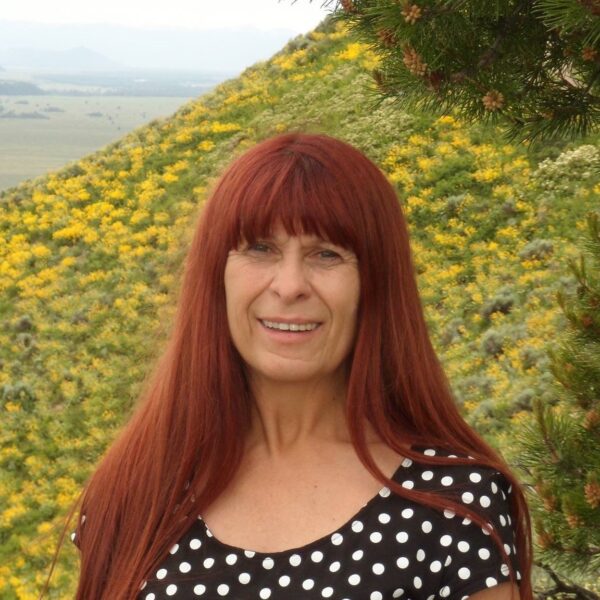
Experiences like that slowly led Chandler toward an unusual career. Today she runs Sacred Messages, a small practice serving clients across eastern Idaho and western Wyoming. People come to her hoping for comfort, answers or a sense of connection.
Chandler works as a psychic medium.
“I’m not the source,” she said. “I’m just the interpreter.”
Belief in life after death remains widespread in the United States. According to the Pew Research Center, 70% of U.S. adults say there is definitely or probably life after death. For many people navigating grief, that belief offers a way to hold onto connection.
Chandler now lives in the mountain town of Jackson Hole, Wyoming, and offers readings through her business, Sacred Messages. She works with clients in the region and all over the world and maintains an office in Idaho Falls.
What started as occasional sessions became a regular practice as word spread among people looking for comfort after a loss.
Most readings now take place either in person or over Zoom, allowing clients from outside the region to schedule sessions. Chandler said the goal of her work is not to convince anyone of anything, but to relay what she believes are messages meant for the person sitting across from her.
“What they need most is someone willing to say, ‘I know this hurts. I see that you’re hurting. I’m here,’” said Brock Wilks, a Chubbuck funeral director who regularly works with families after a loss. “Not to fix it. Just to recognize it.”
Wilks said grief often leaves people searching for reassurance that the relationship they built with someone does not simply disappear.
“At the center of all of it, I think, is hope,” he adds.
Mental health professionals say that search for meaning is a common part of grief. Cody Evans, LCPC, a counselor in Pocatello who sometimes works with clients processing loss, said people often wrestle with questions about what happens after death.
For some, those questions lead them toward spiritual practices or experiences they may not have considered before.
Mediumship is still controversial, with skeptics questioning whether communication with the dead is possible. Evans said some people remain doubtful, while others find the experience emotionally comforting even if they are unsure what to believe.
Chandler said the experiences that led her into mediumship did not happen all at once. Over time she began noticing what she described as impressions or messages that appeared unexpectedly.
“I might hear a word, see an image or get a strong feeling connected to someone,” Chandler said. “Then I share what I’m getting and let the person tell me if it means something to them.”
She said the most difficult part of the work can be sitting with people in the early stages of grief. Those sessions, she said, require patience and empathy.
“You’re meeting someone on one of the hardest days of their life,” Chandler said.
Chandler’s sessions are quiet and conversational. Readings typically last about an hour. Some clients arrive with questions, while others simply listen as Chandler describes impressions she says are coming from the person who has died. Clients sit across from her without saying who they hope to hear from.
She begins describing the person she says has stepped forward, sometimes mentioning a nickname, shared joke or family memory. Clients respond only after recognizing the person she is describing.
Daniel Camacho, a client who lives in Maui, Hawaii, met with Chandler through a Zoom reading and said what surprised him most was how specific the details were.
“It wasn’t vague,” Camacho said. “She brought up things she couldn’t have known.”
Other clients describe similar experiences.
Tiffany Tea, a Pocatello native who visited Chandler after the sudden death of her father, said the language Chandler used during her reading sounded exactly like him.
“The energy was palpable,” Tea said. “It felt like maximum unconditional love.”
For Chandler, those reactions are the reason she continues the work.
“Seeing someone’s heart start to feel peace again,” she said, “makes it worth it.”
Chandler says she doesn’t try to convince people to believe what she believes. Some clients arrive skeptical, others arrive hopeful. She hopes to give grieving people a moment of reassurance.
“You start to realize you’re not alone,” Chandler said. “That changes everything.”