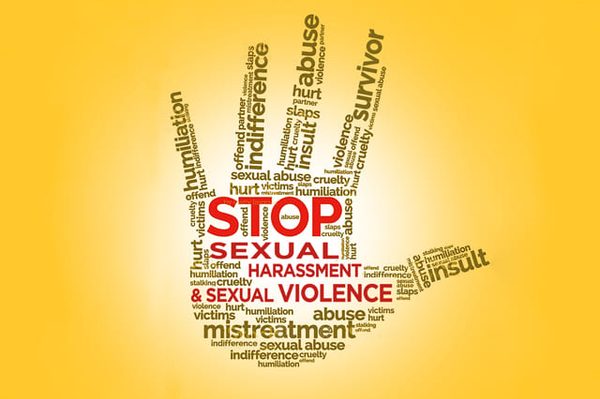
Photo Courtesy of Pixabay
Madison Long
Editor in Chief
Breathing heavy, heart pounding, fingers clenched around the sharp edges of your keys. Just a few more seconds and you’ll be under your covers, doomscrolling until your eyes ache.
Mom always says, “don’t walk alone at night,” but there was no avoiding it. Staying a few hours later than you hoped at your friend’s left you stuck between asking for a ride and signing your friend up for her own dreadful night walk, or just bucking up and doing it yourself.
Crunch. You flip around, eyes scrunched tight, getting ready to thrust the keys into the stomach of your attacker.
But no one is there.
It was a leaf beneath your shoe.
This image plays in the memories of college students everywhere as they work to avoid becoming part of the majority that experience sexual harassment at some point in their life – 81% of women and 43% of men nationwide, as estimated by the National Sexual Violence Resource Center.
Pretending to talk on the phone, religiously watching your drink at a party or having a friend constantly checking your location while you’re out on a date are not just precautionary measures.
According to RAINN, a U.S. anti-sexual violence organization, these habits are part of a harsh reality for women attending college, party-attendee or not. And worst of all, more often it’s someone you know: three in five perpetrators of sexual violence are individuals close to the victim.
“Part of our mission statement is that we want all faculty, staff, students and visitors to feel free to come and receive an education at ISU,” said Marc Pino, the Director of Idaho State University Public Safety. “If you don’t feel safe on campus, then it’s going to make learning or working or teaching more difficult.”
At ISU, Title IX, the department that deals with sexual harassment and sex based conduct, reports that they receive around 100 reports of sexual harassment and sex based discrimination a year.
Ian Parker, the Title IX Coordinator, says stalking is the most commonly reported offense. Specifically, the 2026 Annual Security and Fire Safety Report indicated 30 reports on campus and 16 reports in on-campus student housing in 2025. This was almost as much as the disciplinary referrals for liquor law violations – 25 reports on campus and 25 reports in on-campus student housing.
Picture our student from before. Maybe she was afraid of an ex-boyfriend sneaking up on her on the way back to Rendezvous. Maybe she was just frightened in general, anxiety pounding in her ears, tears burning the corners of her eyes.
“We can’t be everywhere all at once, so we really rely on our community to help report things that they see that are concerning that need to get addressed,” said Pino.
But how do you report something you’re not sure ‘counts,’ especially when you hear things like “everything that happened to you was normal.”
“You caused it [and] besides, he did it ‘cause he liked you.”
“It’s a good thing you didn’t report him, you could’ve ruined his career.”
“You’re lying for attention.”
Sound familiar? Each quote is from a recent anonymous message board from ISU’s Title IX asking for hurtful and helpful comments students heard after experiencing sexual harassment.
Despite feeling frightened or hesitant to come forward with information, Public Safety encourages students not to be afraid and pick up the phone.
Students can request a safety escort via the dispatch line at (208)-282-2525 if they want someone to walk with them or use the Guardian App to adopt a virtual escort (a timer for moving from one location to another. If you don’t arrive on time, the app will share your location and send dispatch to your pin).
You can also call public safety as a direct line to report sexual harassment.
“We’d rather get 30 phone calls about something that turns out to be nothing than we could have gotten one phone call [and] prevented something bad from happening,” says Pino.
From a Public Safety phone call, students can be connected with Title IX, document the issue, choose to pursue a formal course of action or, in some cases, meet with the Dean of Students Office. These departments can temporarily relocate students to housing unknown to the perpetrator of the crime and administer care to the student.
“Whether an investigation is warranted is an analysis that I usually make with the student in deciding what their needs and wants are in resolving the situation,” said Parker. “If a student who has experienced sexual harassment wants an investigation and accountability for misconduct we first need to assess whether it fits the definition [and] whether we have control over the offender.”
An investigation centers around one central question: “is it more likely than not that the respondent did what they are accused of?”
Afterwards, the Annual Security and Fire Safety Report records that typically if an investigation occurs, the resulting disciplinary sanction is decided by three members of the Equal Rights Process Support Team – this is made up of ISU employees who receive annual training on conducting investigation, protecting victims and promoting accountability.
From there, individualized actions will occur, although student sanctions fall into education, university or restitution categories. Education involves work assignments, essays, behavioral contracts or workshops, while university status sanctions include potential suspension, expulsion or probation from ISU programs or locations. Restitution sanctions involve compensation for loss or damage.
Employee disciplinary actions include dismissal from the university, suspension, demotion in pay or an involuntary transfer.
If the conduct doesn’t fit the statutory definition, students can still connect with counselors, outside courts or law enforcement to resolve the issue.
“I want everyone to know that you have a right to an education that is free from discrimination or harassment,” said Parker. “There is no acceptable amount of sexual harassment that you should endure in your time here.”
Those 30 on-campus stalking reports mentioned earlier? Most likely not all the stalking cases that happen – just the ones that students report.
The 2026 Annual Security and Fire Safety Report also showed zero reports of rape, seven of fondling and 14 of domestic violence on-campus in 2025.
But with national numbers from World Metrics reporting that nearly one in 16 college students worldwide experience rape during their time at university, with only 12% of incidents actually reported.
And while ISU’s safety departments do their share in protecting students, do we?
Why does the student walking home at night have to carry a pocket knife, pepper spray and a rape whistle, clutching keys between her knuckles in order to feel safe? Mothers and fathers can teach their children to ask for help and use resources like a safety escort from Public Safety without feeling embarrassed or hesitant.
We can support our friends and family if and when they feel ready to make a report. If that day never comes, we can provide references to counseling and care resources.
But we should be taught as children that no means no. The same allegation you beg a victim to keep to themselves to avoid “ruining” someone’s career is the same sexual harassment allegation that will give them nightmares and keep them afraid of leaving home.
“Addressing sexual harassment to include sexual assault, domestic violence, dating violence and stalking can be incredibly traumatizing, emotionally draining and time consuming,” said Parker. “I want students to report when things are uncomfortable. I would prefer that students don’t wait until a situation is bad enough to fit that definition.”
College is a time of self-discovery, of trying out new foods and meeting new people – some you bond with and others you only meet once. It’s a time of taking risks and experiencing debates, politics and differing experiences in a safe space.
The scariest part about college shouldn’t be surviving the walk home.