Photo Courtesy of Idaho State Athletics
Braxton Gregory
Sports Editor
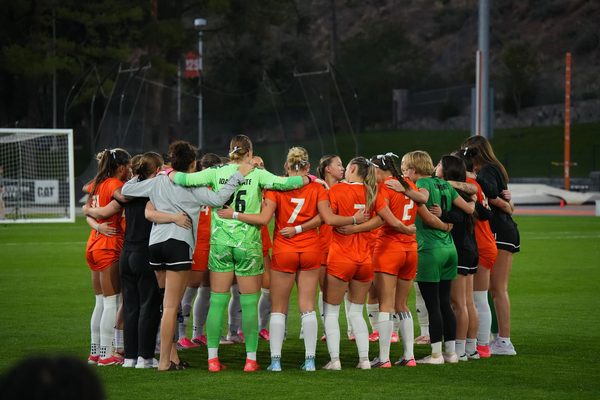
Idaho State University student-athletes wrestle with the same anxiety, depression, grief and self-doubt as any other college student, and they do it while carrying a workload that can outpace a full-time job, according to the therapist who works with them.
Braun Inslee, the athletic and community mental health and performance therapist at Idaho State, meets one-on-one with athletes and speaks with teams when coaches or players ask. He said the problems that bring athletes to his office are rarely just about sports.
“Many of the common issues are human issues and not just student-athlete issues,” Inslee said in an email interview. “Young people, and people in general, also struggle with topics like grief, identity, relationships and feelings of questioning themselves.”
Some athletes come to him hoping to sharpen their performance, only to find that stress at home or in class has followed them onto the field. Others arrive carrying trauma, difficult family situations or spiritual questions.
Inslee said what separates athletes from their classmates is how tightly their identity can become tied to their sport. Many Division I athletes have spent most of their lives being praised, recognized and even funded through athletics, to the point that they begin to measure their worth by each game.
“Every performance, every practice and every piece of feedback can feel like their whole sense of self getting questioned every day,” Inslee said.
Inslee says that name, image and likeness (NIL) deals and the transfer portal have raised the stakes. Putting a dollar amount on performance can intensify the fear of letting teammates and coaches down.
However, NIL has also opened doors for athletes, and the portal gives players a way out of situations that are not right for them.
“There are strong positives and negatives in both directions,” he said.
Sports betting has brought its own strain. Fans who lose money often take their frustration straight to athletes’ inboxes, according to an NCAA article by Saquandra Heath. The NCAA tracked that abuse during the 2023-24 championship season with Signify Group, an artificial intelligence service that flags threatening posts and messages.
The data showed that one in three high-profile athletes received abusive messages from someone with money riding on the outcome, and 90% of the harassment came online or through social media.
During the 2024 Division I basketball tournaments, players received more than 540 abusive betting-related messages, including death threats, with women’s players receiving about three times as many threats as men’s players.
Then-North Carolina basketball player Armando Bacot spoke publicly about the abuse after a game where bettors felt his numbers fell short.
“I looked at my DMs, and I got over 100 messages from people telling me I sucked and stuff like that because I didn’t get enough rebounds,” Bacot said in the NCAA article.
The NCAA has since pushed states to ban prop bets on individual college athletes, and Ohio, Vermont, Maryland and Louisiana are among those that have moved to prohibit them.
Stigma around asking for help still lingers. Inslee said many athletes are high achievers used to fixing problems on their own, and some apologize for crying or feel guilty for what they call complaining during sessions.
“No one has ever done it alone,” he said. “That doesn’t mean we all need therapy, but it does mean we all need people to learn from, lean on and think, grow and feel within our lives.”
He sees attitudes shifting among younger generations as mental health becomes a more common topic of conversation. At Idaho State, he credits the creation of his position, along with work from the Student-Athlete Advisory Committee and administrators, for opening up the discussion.
That focus on the person behind the uniform reaches the top of the athletic department. When the university announced a five-year contract extension for head football coach Cody Hawkins in July 2025, Director of Athletics Pauline Thiros pointed first to the environment he has built.
“While we’re proud of the steady progress Coach Hawkins and his staff have made on the field, what truly sets him apart is the culture he is building within our program,” Thiros said in a university news release. “Coach Hawkins is deeply committed to developing student-athletes of strong character who excel at their work on the field but also in their life and academic goals.”
That approach is not limited to football. Coaches across Idaho State’s programs put a heavy focus on culture, making athletes’ well-being a top priority in every sport.
Athletes can reach Inslee by email or through Teamwork’s, the athletic department’s internal messaging system. All ISU students can also use the university’s Counseling and Mental Health Center.
For any athlete who is struggling, Inslee hopes they remember that no single stat or mistake defines them and that support is there when they are ready.
“It’s ok to not know how to handle certain thoughts, feelings or patterns in your life,” Inslee said. “Just like anything, it takes learning and practice, and I promise you are capable of getting through it if you are brave enough to reach out to someone.”