
Photo Courtesy of Idaho State Athletics
Braxton Gregory
Sports Editor
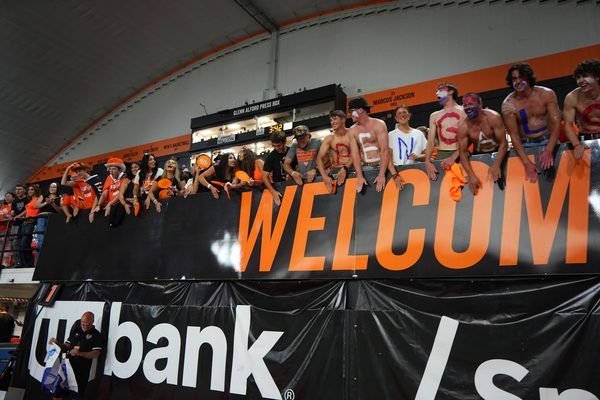
From football to basketball to volleyball, every Idaho State team that takes the field or court at home has one advantage its opponents can’t match: the crowd.
Research across several sports shows home crowds influence how games are called and who wins them. For Bengal programs chasing conference titles and postseason bids, where one whistle can swing a close game and one close game can shift the standings, that influence carries real weight.
A review published in PubMed Central compared soccer matches played with and without fans. When stadiums were empty, home teams lost much of their edge in shots on target, and the gap in yellow and red cards between home and road teams narrowed.
The biggest effect appears to fall on the officials, not the players.
In a 2002 study, researcher Alan Nevill and his colleagues had qualified referees judge videos of soccer tackles. One group watched with crowd noise playing, and the other watched in silence. Referees who heard the crowd called 15.5 % fewer fouls against the home team. The researchers concluded that crowd reactions push officials toward certain calls without them realizing it.
The COVID-19 pandemic offered a real-world test. When leagues played in empty arenas, home teams won less often.
In the NBA, home teams won 58.65 % of their games before the pandemic, according to a study posted on ResearchGate. Without fans, that number dropped to 50.60 %, close to a coin flip. A study of European basketball found home win rates fell from 61 to 56 %.
Home-field advantage has been shrinking for decades, according to a PBS NewsHour report.
Road teams now travel and recover more comfortably, and instant replay allows officials to correct calls a crowd may have influenced. With those factors working against home teams, fans remain one of the few advantages still in their control.
The benefits of showing up extend beyond the scoreboard.
“Participating with your peers in a loud and exciting student section is a powerful way to build strong friendships and develop a community,” Idaho State Athletic Director Pauline Thiros said. “Our student section creates a sense of belonging that supports well-being and academic success.”
That sense of connection isn’t limited to students. Games draw fans from across Pocatello and the surrounding area, bringing together people who might not otherwise cross paths.
“In-person sporting events are one of the last great community unifiers,” said Jonathan Match, Idaho State’s associate athletic director for sports information. “When you attend an event in person, it allows you to connect with everyone from all walks of life. Different cultures, professions and groups come together to cheer on a common goal, something that might not happen if you only watch a game on TV.”
A loud crowd won’t win games on its own. But the research shows it gives the home team something the visitors can’t bring with them.