
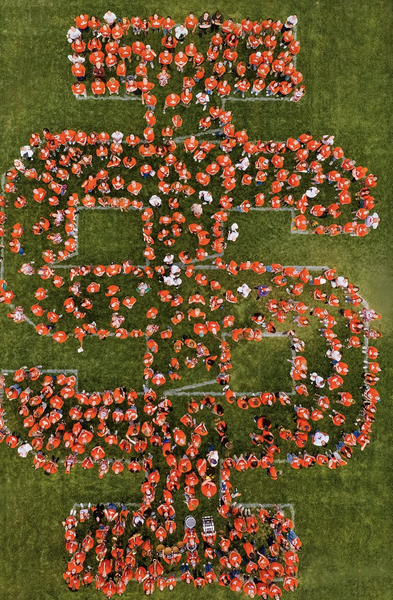
Photo courtesy of isustudents Instagram
Madison Long
Editor in Chief
Idaho State University released their Fall 2026 enrollment numbers on Oct. 16, reporting a slight dip of 2.7% in student numbers.
Compared to last fall, this number is fewer by 377 students, rolling in at a total of 13,533 students.
Matt Daily, Assistant Vice President for Student Affairs & Dean of Students, reports that while the dip was unexpected, ISU’s enrollment is still showing record numbers across the last five years — Fall 2026 marks a 10% growth compared to Fall 2021.
Enrollment at the Idaho Falls Campus has also increased following targeted recruitment efforts, with a 12.5% increase in undergraduate students, largely in elementary education and nursing programs.
“Even though we’re down a little bit from last year, the student events and activities have more students at them,” says Craig Chatriand, Vice President for Student Affairs and Enrollment Management. “We had a STEM business career fair that saw an increase of 30% of student attendance. Our students still want to be engaged, they are still coming to things, they still are looking for community.”
Part of the decrease in enrollment comes from fewer international students. Chatriand says international students face more barriers. Along with language, cultural and academic adjustments, international students also contend with a combination of challenges in maintaining valid U.S. student visas, potential ineligibility for U.S. federal aid or additional living costs.
Statewide, universities are seeing a 7.7% decrease in applications through Apply Idaho — a free application that lets Idaho high school seniors apply to in-state colleges — leading to fewer new undergraduate students from Idaho. Currently no detailed research is available for the exact reasoning; however, it could be tied to financial considerations, a lack of personal ties to Idaho, academic career desires or by the choice to enter the workforce immediately after graduation.
In fact, beginning in Fall 2026, ISU’s resident undergraduate tuition increased by $425. Moreover, policy changes under the One Big Beautiful Bill Act have changed loan caps, Pell Grant rules, repayment structures, aid formulas and grant eligibility, making it harder for some previously qualified families to continue receiving federal financial support.
Specifically, opportunities such as the Idaho LAUNCH grant are constantly updated to reflect the state’s “in demand” careers, potentially dropping certain majors off and adopting others in cycles.
“I think we’re just in such a real volatile time right now because expenses are up. It’s more expensive exponentially than it was a year ago, even two weeks ago,” says Daily. “We talk about the cost of college, [but] we don’t talk about the cost of adulting.”
For ISU students, a small dip in enrollment can potentially mean changes to the university’s budget. Lower enrollment leads to less money allocated to ASISU, who support student organizations, the Bengal Theater, the Civic Symphony, KISU Radio and the Bengal Newspaper.
Past budget changes from the state legislature have led to college reorganizations, increased fee costs or combining class sections.
“We really don’t want it to impact students in a really significant way, but I think we’re trying to be a little bit more strategic in terms of what fees [we do have],” says Daily. “But you’ll notice nothing’s really changed dramatically from this year to previous years where we’ve had the Abyss and Homecoming.”
However, ISU remains determined to meet student needs through the public-private construction of a new housing complex on Bartz Field, and through the planned expansion of several programs — including the Certified Nurse Anesthetist doctoral program, radiographic science at the Idaho Falls campus and dental hygiene at the Meridian campus.
Last spring, ISU worked with industry partners to develop the first state-wide three-year applied bachelor’s degree program, designed to save students time and money before entering the workforce.
Additionally, ISU’s Workforce Training program saw growth in their CPR training, EMT training, phlebotomy and apprenticeship areas by 11.12% collectively. At the same time, enrollment in the nuclear industry has increased by 13.7%, with a second nuclear microreactor to be built.
And as October finishes and the semester continues, the Student Affairs department plans to visit high schools and to host college fairs and open houses around the state, answering questions and helping students fill out FAFSA forms and pursue other financial aid opportunities.
“I think it helps to take a long-term view from two years ago to last year, we had a 6% increase. That’s not sustainable, we can’t do that every year. We can’t absorb that many students,” says Chatriand. “Every single one of those numbers is a student. Every single one of them is somebody who’s coming here to get a life-changing education.”